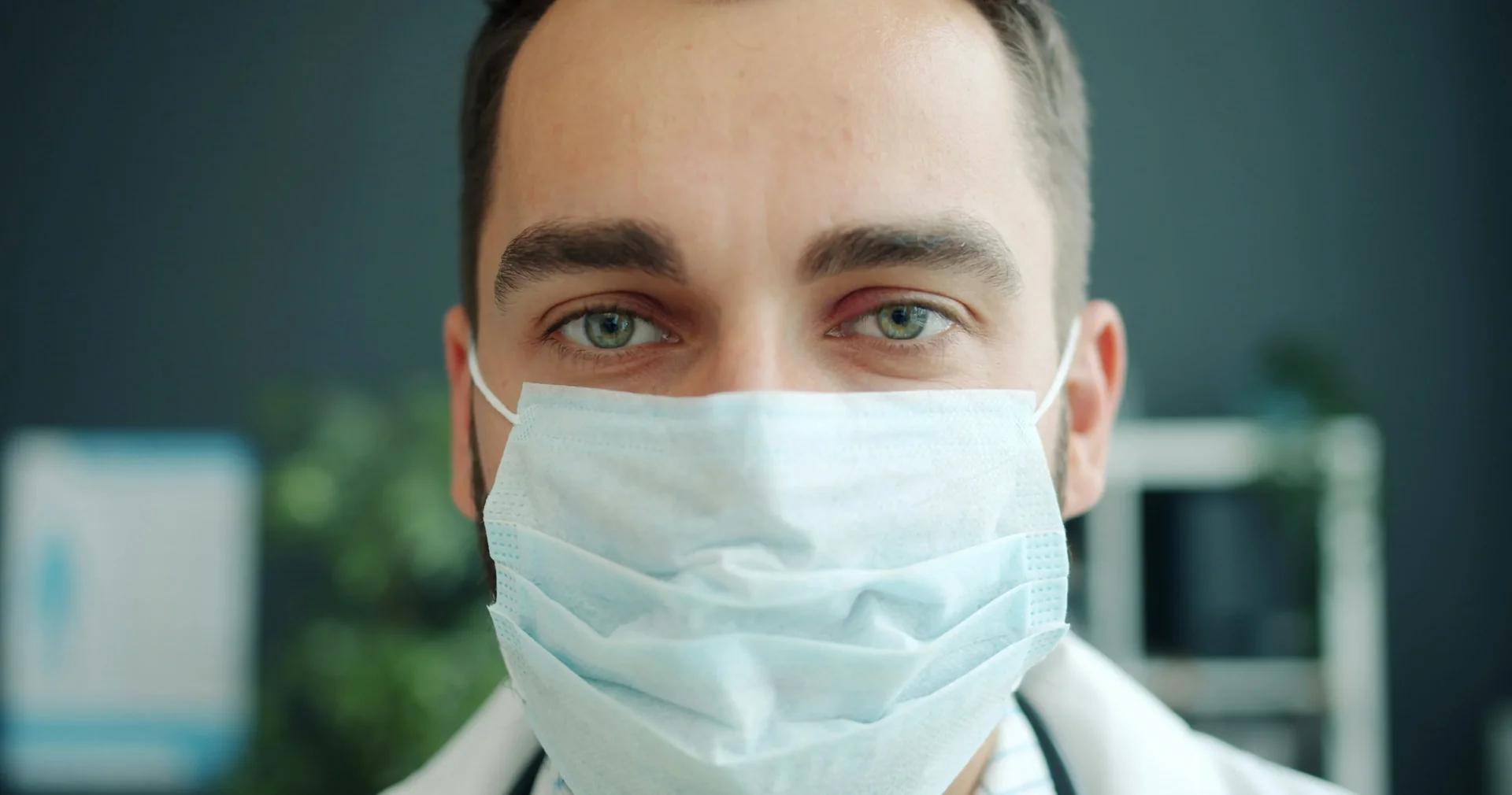
Updated guidance on the management of a victim during the COVID-19 pandemic
Background
• Cardiac arrest occurs when the heart unexpectedly stops beating.
• More than 80% of cardiac arrests happen at home, so responders are often family members or friends.
• Cardiopulmonary resuscitation (CPR) and the use of automated external defibrillators (AEDs) significantly improve the chances of survival.
• Given the exceptional circumstances of the COVID-19 pandemic, there is some concern about the risk of a responder contracting the disease while performing CPR or using an AED.
• The recommendations below are based on expert opinion.
• They will help reduce the risk of virus transmission to a responder performing CPR or using an AED in the event of cardiac arrest.
• These are modifications to standard hands-only CPR, applicable in the context of the COVID-19 pandemic.
• They apply to both adults and children.
Response protocol
If you are with a person who may have suffered a cardiac arrest during the COVID-19 pandemic and you feel ready to help, but also want to reduce the risk of coronavirus transmission, you should take the following steps, which are modifications of standard CPR.
• Determine that it is a cardiac arrest by noting the absence of response when you shake the person and shout AND the fact that the person is not breathing or is making abnormal breathing sounds such as gasping.
• Do not lean in to listen for or feel breathing by bringing your ear and cheek close to the victim's mouth.
• Simply observe for breathing.
• Explain that you have found an unconscious person who has abnormal breathing.
• Tell them if there is a possibility of COVID-19.
• Place a cloth, towel, or piece of clothing over the victim's mouth and nose to prevent any spread of the virus through contaminated air or saliva.
• Place the heel of one hand in the center of the chest and the other hand on top, then push hard and fast.
• Perform compressions to the rhythm of the song Staying Alive, or 100 to 120 beats per minute.
• Do not give rescue breaths.
• Continue until help arrives.
• The 9-1-1 emergency medical dispatcher will give you directions as needed.
• The chances of survival after a cardiac arrest are 2 times higher when a bystander intervenes with an AED before the arrival of emergency medical services.
• AEDs are safe and easy-to-use devices.
• Turn it on and follow the on-screen instructions guiding you through each step of using the device.
Hygiene and cleaning measures
After a resuscitation attempt
• Once paramedics or first responders have taken over resuscitation, wash or discard the cloth, towel, or clothing that was used to cover the victim's face.
• You must then wash your hands thoroughly with soap and water; an alcohol-based hand gel is an alternative.
Special circumstances
• The actions above apply to the majority of sudden cardiac arrest situations.
• In certain circumstances, you may provide other treatments if you have received the necessary training.
• You should only provide these treatments if you have no concerns about COVID-19 transmission (e.g., you know the victim well).
THESE SITUATIONS INCLUDE FOR EXAMPLE:
• An opioid overdose (administration of naloxone and rescue breaths/ventilations, followed by chest compressions if there is no response).
• A drowning that you witness (rescue breaths/ventilations and chest compressions).
• A cardiac arrest in a child (rescue breaths/ventilations and chest compressions).
Good Samaritan law
Duty to act
The rescuer must provide assistance to the best of their abilities and knowledge. Laws, for the most part, require that you not leave the scene of an incident or accident and that you ensure emergency services are contacted.
Under no circumstances will these laws require you to put your health, integrity, or even your life at risk in order to rescue one or more persons in distress. The Good Samaritan law was therefore created to prevent a bystander from hesitating to act in the face of an incident, out of fear of legal action in the event of a mistake on their part.
This principle aims to protect any individual providing assistance to one or more victims, in the event of an error in their rescue intervention. If the rescuer's error may have unintentionally caused injury, or even death, as long as the rescuer acted solely with the intent of helping the victim, they will be protected by the Good Samaritan law.
Written by Alexandre Grenier, Founder of Formation RCR et Secourisme Québec. Illustrated and laid out by Émilie Bedard, communications officer.
International Liaison Committee on Resuscitation (ILCOR). 2020. "COVID-19 infection risk to rescuers from patients in cardiac arrest". https://costr.ilcor.org/document/covid-19-infection-risk-to-rescuers-from-patients-in-cardiac-arrest